Multi-Location Menu Sync: Why Your 86 Board Can't Live on One Screen Anymore
Running multiple locations with siloed 86 boards creates false confidence and service failures. Learn why multi-location menu sync is now a must.
Logan Manuel13 min read

Once you run more than one location, a single-screen 86 board fails because each kitchen only sees its own stock: a server downtown can't know uptown just ran out of the branzino. Multi-location menu sync fixes this with one live source of truth every location reads, pushed to each team member's phone with confirmed calls.
Every operator who has ever called out "86 the halibut" across a busy kitchen understands the urgency baked into that phrase. In a single location, keeping everyone aligned on what is unavailable is difficult enough. Introduce a second location, a third, or a tenth, and keeping every location's 86 status aligned becomes a genuine operational liability.
The multi-location 86 problem is architectural. Legacy 86 restaurant systems, whether a whiteboard, a tablet app, or a shared spreadsheet, were designed around a single kitchen and a single source of truth. The moment your operation spans multiple sites, those tools stop solving the problem and start creating a new one: false confidence. A server at your downtown location has no way of knowing that your uptown kitchen just ran out of the branzino. Your systems were never built to tell them.
The sections below examine exactly where and why single-point 86 systems break down for multi-location restaurant operators: how siloed 86 boards compromise service integrity, why half-measures fall short, and what a true platform-level 86 sync actually requires to keep every location aligned in real time.
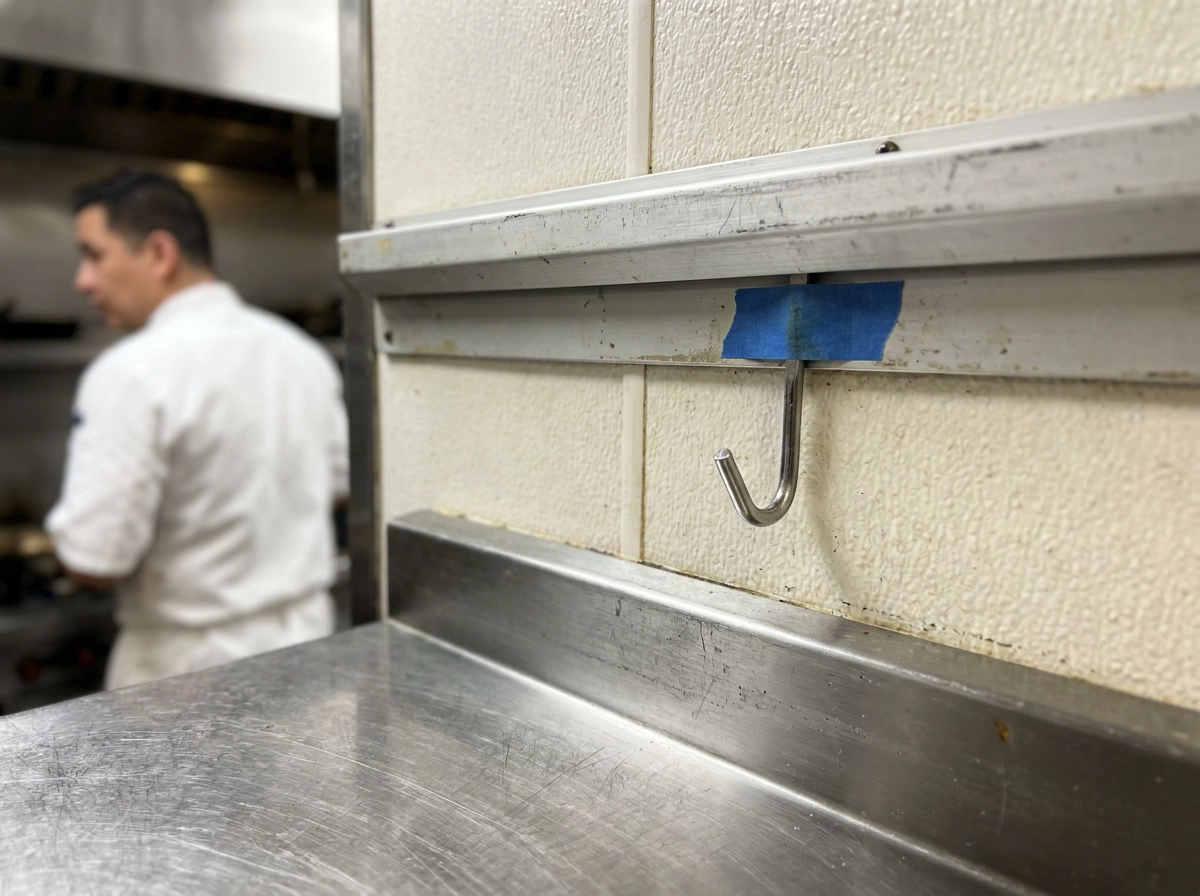
What Does '86' Actually Mean in a Restaurant, and Why Has It Always Been a Communication Problem?
In every professional kitchen, the term "86" carries one unambiguous meaning: this item is gone. Whether a supplier no-showed, prep fell short, or the last portion just left the pass, calling something 86'd is the signal that stops the floor from selling what the kitchen can no longer deliver. The term itself has disputed origins, but its operational function is universal across American restaurant culture.
The problem with 86 has never been the signal. The problem has always been the relay.
In a single-location operation, the 86 relay holds together because the environment is closed. One kitchen, one floor, one team sharing physical space. A line cook calls it, someone writes it on the board, a manager walks it to the servers. The loop is short enough that human attention can close it, most of the time.
The failure modes of a single-kitchen 86 relay are entirely human: the server who was in the weeds when the call went out, the cook who shouted it but never wrote it down, the manager who assumed front-of-house already knew. Centralizing the board and pushing live updates to every team member's phone addresses exactly this, removing the relay problem at the single-location level.
But a centralized single-location 86 board rests on one assumption: a single source of truth.
The deeper issue with 86 communication is cultural. Restaurant code 86 has always been treated as a moment, a call made and then resolved, rather than a persistent data state that the whole operation needs to read and reconcile. At one location, that mental model is survivable. At two or more, it becomes the foundation of a system that is already failing before the second kitchen opens.
The Single-Location Baseline: Why the Old System Felt Like It Was Working
Physical proximity does most of the work in a single-location operation. The 86 call goes out, one person updates the board, and because every stakeholder is standing within earshot, the team self-corrects within minutes. Proximity is the system.
Digital 86 tools built for one location compress the call-and-update loop further. Push notifications replace shouting across the pass, confirmation trails replace the assumption that someone relayed the message, and a manager can audit what's live at a glance rather than walking the floor to check. For a single kitchen, that closed-loop architecture is genuinely effective.
The problem with single-location 86 tools is that "effective" and "scalable" are not the same thing, and single-location constraints make them look identical. When your floor team, your line, and your manager all share one physical space, the gaps in your system get patched by proximity and habit. Fragility stays hidden. Many operators who later scaled describe their original setup as "good enough," and the honesty in that phrase is uncomfortable: it was good enough because nothing had yet exposed what it couldn't do.
The restaurant menu app category largely reflects the same single-site footprint as the kitchen whiteboard. One kitchen, one board, one team. Most tools in the market were designed inside that scope and optimized for it. The same pattern plays out in adjacent workflows; a kitchen prep list template that carries one location through service without friction can quietly become an operational liability the moment a second location enters the picture.
When an operator opens a second location, the natural assumption is that the existing 86 tool scales with them. It doesn't. That assumption is where the liability begins.
The Inflection Point: What Changes the Moment You Open a Second Location
Opening a second location does not simply double your coordination burden, the variables compound in ways a per-site board was never built to handle. Every variation at each site, a prep timing difference, a supplier substitution, a line staffing gap, now has to be reconciled against a shared operational picture that a siloed system cannot produce.
Inventory is the sharpest illustration of the second-location 86 problem. What is 86'd at Location A has no bearing on stock at Location B, and a per-kitchen board gives neither location any mechanism to see the other's live status. Two kitchens, two closed loops, zero shared signal.
The siloed 86 board sits inside a broader data alignment problem that multi-location operators know well: sales reports, inventory counts, and operational statuses arrive from multiple sites and routinely fail to reconcile. The 86 board is the most time-sensitive version of that same misalignment. A financial reporting lag costs you clarity at month-end. An 86 misalignment costs you during the next ticket.
False confidence is the specific and underappreciated risk. A manager at Location B sees a clean board and assumes the menu is fully available, unaware that Location A has been depleting a shared supplier item that will hit Location B in the next delivery cycle. No one made an error. The system just had no way to surface what it did not see.
The structural argument for multi-location menu sync follows directly. A siloed 86 board is not a workflow problem or a staff training gap. A siloed 86 board is an architecture problem, and the logic behind change it once; the whole line sees it only holds if the platform is built to serve every location at once, not one board at a time.
How Do Siloed 86 Boards Create False Confidence Across Your Operation?
Siloed 86 boards create false confidence by showing each location only its own kitchen's reality, so staff keep selling and prepping as if the whole menu is available.
The front-of-house failure is immediate and guest-facing. Servers rely on the 86 board to set accurate expectations before a table orders. When that board reflects only one kitchen's reality, staff at the unaffected location continue selling items that are either already unavailable at a sister site or trending toward unavailability at their own. The guest pays for the information gap with a disappointing conversation mid-service.
The compounding layer is the digital menu. Third-party delivery platforms pull availability data from whatever system the operator has configured. A siloed 86 state means online menus frequently remain wrong after a kitchen has called an item off, because the signal never propagated to the channel. The result is orders that cannot be fulfilled, cancellations, and substitutions that erode the delivery experience.
Back-of-house confusion from a siloed 86 board follows the same pattern. A line cook at Location B with no visibility into Location A's 86 status cannot anticipate prep adjustments or substitution needs, and cannot brief the floor before service pressure mounts. This is where a broken prep list compounds the problem further: siloed unavailability data and siloed prep communication fail together.
The downstream cost of siloed 86 boards lands in remakes, comped items, and guest complaints. Most operators absorb those as isolated service failures, which is exactly why the structural cause stays invisible longer than it should.
Why Do Existing Solutions Only Solve Half the Problem?
Existing solutions only solve half the problem because they sync availability at the customer touchpoint, not in the kitchen.
POS-level and ordering-channel platforms are designed to sync item availability across delivery apps and front-of-house ordering systems. That capability is real and valuable, but it stops at the customer touchpoint. A restaurant menu app operating at the channel management level can suppress an item from an online order flow, but it cannot tell the line cook at Location B what the prep team at Location A already called off two hours ago. The kitchen never receives that signal.
Per-kitchen tablets replicate the whiteboard problem in digital form: no native mechanism exists to propagate an 86 status to another site in real time.
Group chats and shared documents are the improvised middle ground most operators land on, and they introduce their own compounding problems. During a busy service, a thread that read cleanly at noon becomes noise by 7 p.m. More critically, operators cannot confirm that the right people saw the update. There is no audit trail, only assumptions, and those assumptions are precisely what creates guest-facing failures.
The gap in today's restaurant tool stack is specific: no kitchen-operational layer delivers real-time 86 status across every location simultaneously, with built-in confirmation. Channel management solves for the guest. Heard is built specifically for the kitchen layer, centralizing the 86 board on every team member's phone with live updates and confirmed calls, which is where the actual decision is made and where the information has to land.
What Does a Platform-Level 86 Sync Actually Require?
A platform-level 86 sync requires four things: a single source of truth, updates pushed to every cook's phone, confirmation of who saw each 86, and scope logic that knows whether an outage is local or group-wide.
A single source of truth is the non-negotiable foundation. Every location must write to and read from the same live state. The moment any kitchen marks an item unavailable, that status propagates everywhere simultaneously. Optional sharing between per-site boards is not synchronization; it is a delay with extra steps.
Delivery must reach the device already in the cook's hand. A shared tablet mounted in the corner replicates the whiteboard problem in digital form: one screen, one point of failure, and no guarantee anyone looked. Real-time updates pushed to each team member's phone eliminate the gap between broadcast and awareness.
Confirmation is not a courtesy feature; it is the core reliability mechanism. Broadcasting an 86 without knowing who acknowledged it recreates the exact assumption problem that killed the whiteboard. Operators need a confirmation trail showing which staff at which locations saw and accepted the update, not just a timestamp indicating something was posted.
Scope logic matters. A supplier outage hits every location at once and demands group-wide communication. A prep failure at one site is local and should route accordingly. A platform that cannot distinguish between these two scenarios will either over-alert or under-communicate, and either failure degrades trust in the system.
Heard is built specifically for the kitchen-level 86 sync layer. The 86 board, prep list, and recipe book are centralized and live on every team member's phone, with real-time updates and confirmed calls across locations. That architecture directly addresses the gap that single-site tools were never designed to close.
How Do You Know You Have Outgrown Your Current 86 System?
You have outgrown your current 86 system when stockouts reach you by phone call, your floor sells items another site has already 86'd, and managers spend service cross-referencing statuses. These are the operational signals to watch for.
You learn about a stockout through a phone call. When a manager at another location is the first to tell you an item is out, your system is reactive by design. A notification should precede that call, not replace it.
Your floor has sold items already 86'd at another site. Selling an item that is already 86'd elsewhere is not a service failure. The server did their job correctly against the information they had. The information was wrong because availability at one location never reached the other. Guest-facing errors that trace back to an information gap are architecture problems, not staff problems.
Your managers are on their phones cross-referencing statuses instead of running their floor. Every minute a manager spends texting another location to confirm what is still available is margin the second location was supposed to generate, spent on coordination that a connected system would have made unnecessary.
Your delivery and online menus contradict your kitchen reality. Order cancellations and mid-service substitutions that stem from stale menu availability are preventable. When the 86 board and the ordering channel are not connected in real time, the guest pays for the gap.
You are about to open a third location and see exactly what comes next. Adding another siloed board does not extend the system; it multiplies the coordination burden again. Opening a third location is the moment the architecture question stops being theoretical and becomes a decision with a deadline.
The Architecture Argument for Multi-Location Operators
Operators who scale without coordination drag treat multi-location menu sync as infrastructure, in the same category as a shared POS or unified payroll system. That framing shift is what separates groups that build coordination systems from groups that keep hiring around the gaps.
The requirement for multi-location menu sync is unchanged from what the platform layer demands: one live source of truth, confirmations built in, on the device already in every team member's hand. A restaurant menu app built for multi-location operations treats this as a baseline, not a premium tier.
The most practical next step for a multi-location operator is a direct audit of the current 86 system. Ask your current system one question: did every relevant team member at every location see and confirm this 86? If the system cannot answer that question with a record, the architectural gap is not a future risk. It is an active, ongoing cost embedded in every service where that confirmation never happened.
Conclusion
Multi-location operations do not fail because of bad staff or bad intentions. They fail because single-location tools get stretched past their design limits. The core takeaways are straightforward: an 86 board built for one kitchen cannot serve five; siloed systems create false confidence that costs you covers and credibility; and broadcast without confirmation is not a system, it is a wish.
The multi-location 86 audit is one question: did every relevant team member at every location confirm that 86? If the system can't answer it, the gap is already costing you.
Sources
- “eighty-six” — definition and origin
Dictionary.com
Dictionary entry: first recorded 1930–35 as bar and restaurant slang, origin uncertain.
- 2017 Economic Census: Accommodation and Food Services (NAICS Sector 72)
U.S. Census Bureau
Economic Census tables for the sector, including establishment and firm-size statistics.
- 2026 State of the Restaurant Industry
National Restaurant Association
Annual operator survey on costs, traffic, profitability and technology adoption.